
Por favor, use este identificador para citar o enlazar este ítem:
https://repositorio.uca.edu.ar/handle/123456789/21923| Campo DC | Valor | Lengua/Idioma |
|---|---|---|
| dc.contributor.author | Bottesi, Federico L. | es |
| dc.contributor.author | Zemba, Guillermo R. | es |
| dc.date.accessioned | 2026-06-19T18:53:42Z | - |
| dc.date.available | 2026-06-19T18:53:42Z | - |
| dc.date.issued | 2025 | - |
| dc.identifier.issn | 1873-1562 | - |
| dc.identifier.uri | https://repositorio.uca.edu.ar/handle/123456789/21923 | - |
| dc.description.abstract | We consider the known effective field theory of the Calogero-Sutherland model in the thermodynamic limit of large number of particles, obtained from the standard procedure in conformal field theory: the Hilbert space is constructed a priori in terms of irreducible representations of the symmetry algebra, and not by diagonalization of the hamiltonian, which is given in terms of fields that carry representations of the W1+∞ algebra (representing the incompressibility of the Fermi sea). Nevertheless, the role of the effective hamiltonian of the theory is to establish a specific dynamics, which deserves further consideration. We show that the time evolution of the (chiral or antichiral) density field is given by the quantum Benjamin-Ono equation, in agreement with previous results obtained from the alternative description of the continuous limit of the model, based on quantum hydrodynamics. In this study, all calculations are performed at the quantum operator level, without making any assumption on the semiclassical limit of the fields and their equations of motion. This result may be considered as a reliable indication of the equivalence between the quantum field theoretic and quantum hydrodynamical formulations of the effective theories of the model. A one-dimensional quantum compressible fluid that includes both chiralities is the physical picture that emerges for the continuous limit of the Calogero-Sutherland model. | es |
| dc.format | application/pdf | es |
| dc.language.iso | eng | es |
| dc.publisher | Elsevier | es |
| dc.rights | Atribución-NoComercial-CompartirIgual 4.0 Internacional | * |
| dc.rights.uri | http://creativecommons.org/licenses/by-nc-sa/4.0/ | * |
| dc.source | Nuclear Physics, Section B. 1012, 2025 | es |
| dc.subject | DINAMICA CUANTICA | es |
| dc.subject | MODELO CALOGERO-SUTHERLAND | es |
| dc.subject | TERMODINAMICA | es |
| dc.title | Quantum dynamics of the effective field theory of the Calogero-Sutherland model | es |
| dc.type | Artículo | es |
| dc.identifier.doi | https://doi.org/10.1016/j.nuclphysb.2025.116825 | - |
| uca.issnrd | 0 | es |
| uca.affiliation | Fil: Bottesi, Federico L. Universidad de Buenos Aires; Argentina | es |
| uca.affiliation | Fil: Zemba, Guillermo R. Pontificia Universidad Católica Argentina; Argentina | es |
| uca.affiliation | Fil: Zemba, Guillermo R. Comisión Nacional de Energía Atómica; Argentina | es |
| uca.version | publishedVersion | es |
| item.languageiso639-1 | en | - |
| item.fulltext | With Fulltext | - |
| item.grantfulltext | open | - |
| crisitem.author.dept | Facultad de Ingeniería y Ciencias Agrarias | - |
| crisitem.author.dept | Facultad de Ingeniería y Ciencias Agrarias | - |
| crisitem.author.parentorg | Pontificia Universidad Católica Argentina | - |
| crisitem.author.parentorg | Pontificia Universidad Católica Argentina | - |
| Aparece en las colecciones: | Artículos | |
Ficheros en este ítem:
| Fichero | Descripción | Tamaño | Formato | |
|---|---|---|---|---|
| quantum-dynamics-effective.pdf | 751,99 kB | Adobe PDF | 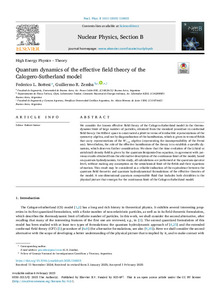 Visualizar/Abrir |

Este ítem está sujeto a una Licencia Creative Commons
